Container Building
Container Building is the process of creating a safe space for a group or a team by establishing both trust and ground rules for engagement. A container in this context is defined by the boundaries of a social field and incorporates three qualities: open mind (seeing), open heart (feeling), and open will (intention). A container sets the tone for a journey that is about to unfold by providing a safe space for risk-taking in an atmosphere that supports growth and learning.
Iceberg Model Diagnostic
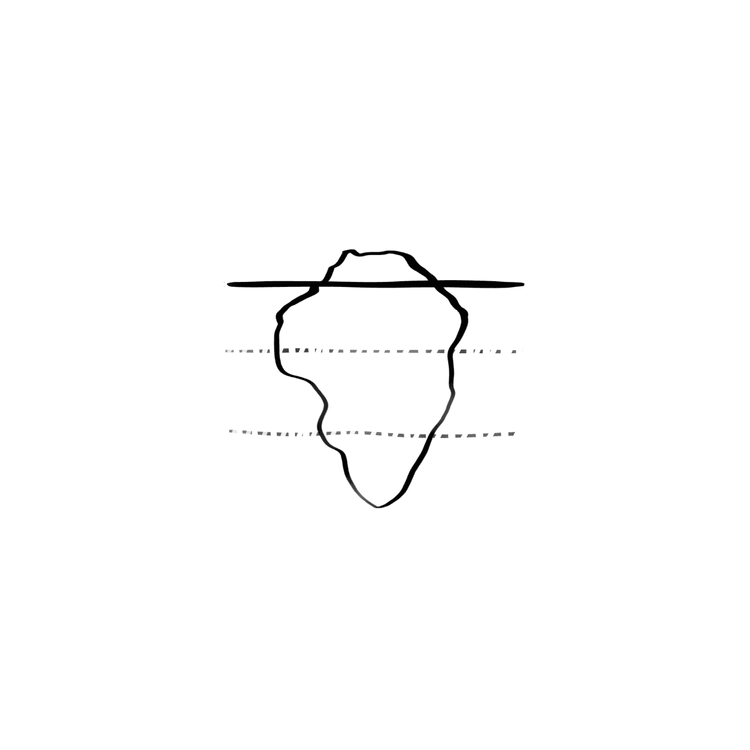
The Iceberg Model is a diagnostic tool that is used to analyze systemic structures and identify blind spots that cause a team/organization/society to collectively reproduce results that no one wants. The Iceberg Model makes underlying structures, paradigms of thought, and sources visible. When these are ignored, they keep teams locked into reenacting patterns of the past.
Listening Assessment
Listening is at the source of all great leadership. It is a core skill, not only for leadership, but for all domains of professional mastery.
Stakeholder Interviews
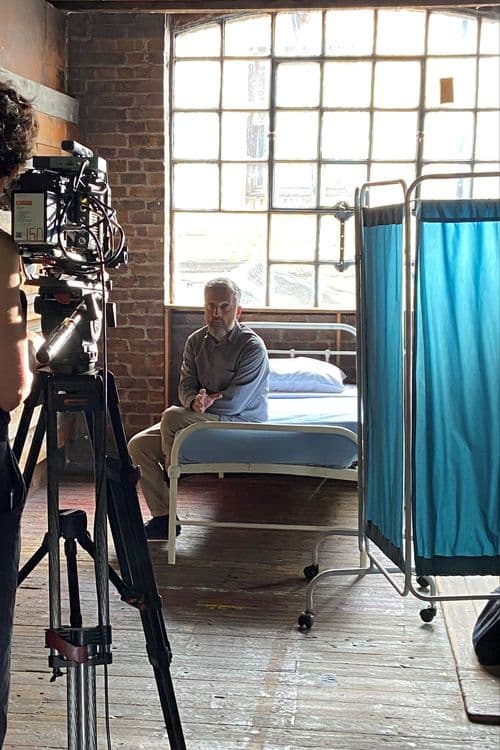
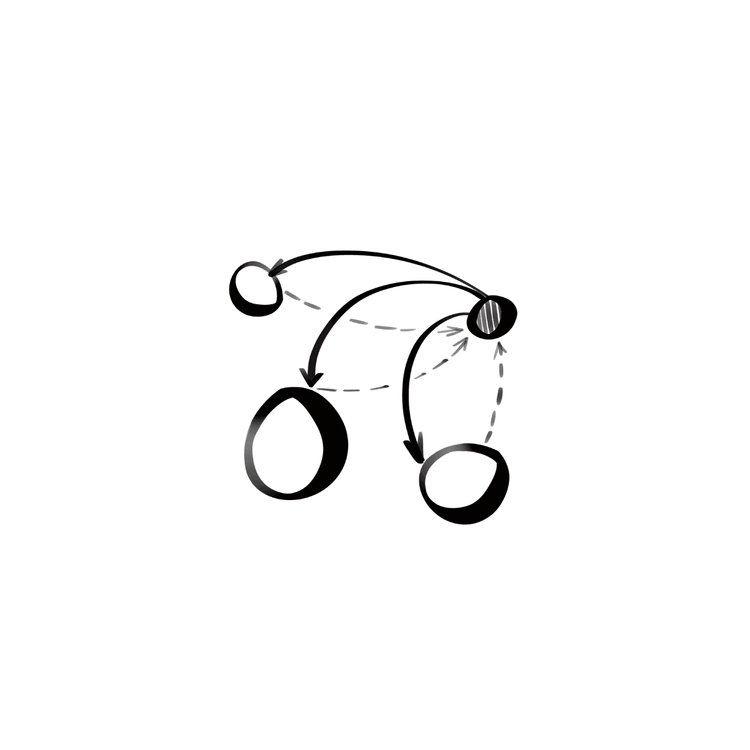
Stakeholder Interviews are conducted by practitioners with key stakeholders in their ecosystem, such as decision makers, team members, peers, or customers both within and outside an organization. The interviews allow you to step into the shoes of the interviewees and see their role through their eyes.

Dialogue Interviews
Dialogue Interviews engage an interviewee in reflective and generative conversation. Their purpose is to develop trust and encourage collective thinking that sparks creativity. Dialogue Interviews can occur with anyone inside or outside your system, in a professional environment or a more personal one.

Empathy Walk
An Empathy Walk develops your capacity to “hold space” for someone who is very different from you and establish a relationship across a significant boundary. It is adapted from the work of MIT Professor Emeritus Ed Schein, who has shaped the field of organizational culture, learning, and leadership over the past 50 years.
Learning Journeys
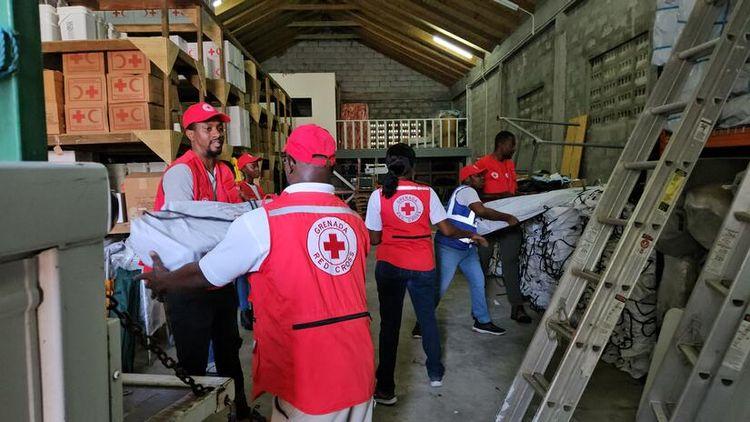
Learning Journeys invite participants to step out of their daily routine and to experience places, people, and organizations that are relevant to issues they are working on. Learning Journeys allow participants to break out of established patterns and to experience circumstances and issues from a different perspective. Learning Journeys can also help build relationships with key stakeholders and provide a view of the system as a whole.

Shadowing
Shadowing describes the practice of accompanying/observing someone for a defined period of time during their work and learning from this observation.

3D Modelling
3D Modelling is a physical process. Participants create a sculpture that represents their current situation and the emerging possibilities of their work and life. The process prompts questions from four vantage points, allowing for 360-degree seeing and sensing of an emerging future. The power of the practice lies in participants relying on their hands, rather than on habitual ways of thinking, to discover new insights.

Guided Journaling
Guided Journaling invites practitioners into a process of self-reflection. The journaling questions follow the U-process.
Seeds
Seeds begin to shape what emerges during a time of silence and reflection. Seeds are small personal notations, but they hold the potential for deep change. This practice is especially useful after a process of Guided Journaling as a way of identifying what resonated most strongly from the “field of the future.”
Story Sharing
Story Sharing shifts participants from a place of seeing to sensing, where perception begins to happen from the whole field. Story Sharing invites participants to connect to a moment when their sense of Self shifted and clarified, when they became more of who they are, and then to share this story if they feel comfortable doing so. Story Sharing requires a container in which people see and connect on a deeper level, by listening with an open mind, open heart, and unconditional attention.
Prototyping
Prototyping moves an idea or innovation into something concrete. A prototype is an experiential microcosm of the future you want to create; it allows you to “explore the future by doing.” A prototype is an early draft of what a final project or initiative might look like; it can go through several iterations, based on feedback from stakeholders. The purpose of Prototyping is to refine an idea and its underlying assumptions, and to test what later could become a pilot project that can be shared and eventually scaled up.

Case Clinic
Case Clinic is a peer coaching process designed to identify innovative solutions and next steps for addressing a pressing and immediate leadership challenge. In a Case Clinic, a case giver presents a case, and peers or team members act as coaches, based on the principles of the U-process and process consultation.

20-minute Dance
The 20-minute Dance is a practice in which we pay attention to the feeling of the body, without thinking about it or judging it.
Stuck
The Stuck Exercise is often used during the sensing phase of the process. We do not know what the movements will be or where they will stop. Surprising insights can arise.
4D Mapping
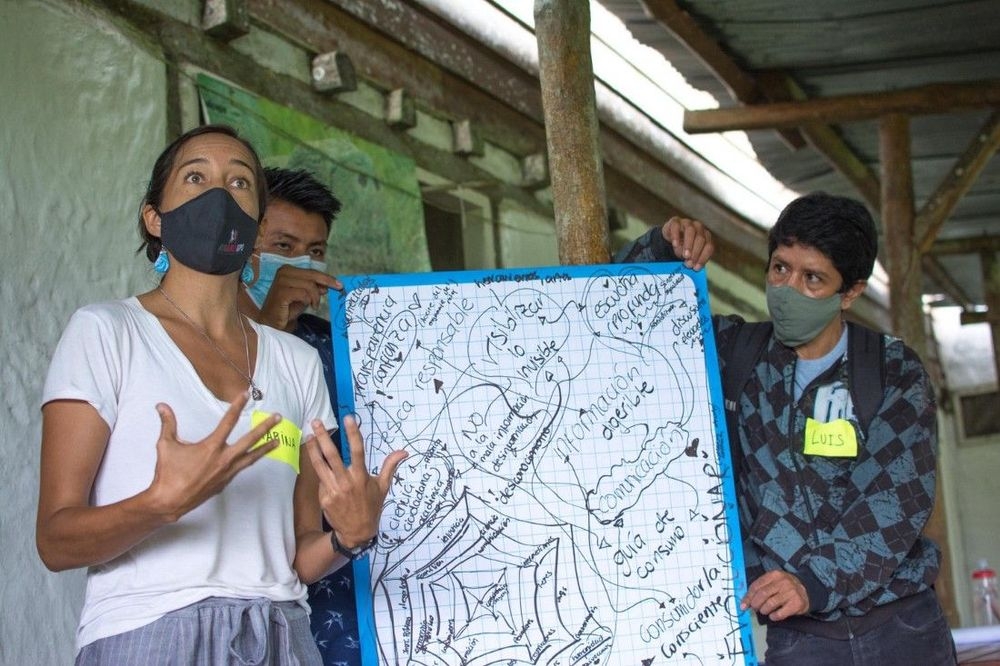
4D mapping makes visible the current reality in a social system, such as a school system, health care system, or government.

Pedagogies of Togetherness
A living curriculum inviting educators and practitioners to craft togetherness.