ABOUT US
Our Story
The Presencing Institute (PI) was founded in 2005 by Otto Scharmer and a circle of co-founders, first as a non-profit in Boston and later in Berlin. Today we are a planetary network of practitioners, action researchers and awareness-based change makers, with a small core team spread across several regions.
Here is how the story unfolded.
1960s–1980s
2005–2014
2015–2024
1960s–1980s
Our Roots: The Farm and the Social Soil
Our work begins with the land.
Otto grew up on Hof Dannwisch, his family’s biodynamic farm in northern Germany. His parents, early pioneers of organic farming, taught him that the quality of the soil shapes the quality of everything that grows above it.
When Otto was 16, the 350-year-old farmhouse burned to the ground. Standing before the ruins, he felt everything familiar was gone, and yet something new began to open: a sense of a future possibility waiting to emerge. That moment foreshadowed what we now call presencing.
In the same years, Otto joined two youth movements of his generation: the movement for decentralized, renewable energy and against nuclear power, and the peace movement against the Cold War arms race. There he felt the same thing, this time collectively. What fuels social movements is a shared sense of a future possibility that will only come about if we step up together.
These experiences became the foundation of our work. Just as soil conditions shape everything that grows from it, social soil–the quality of our relationships and shared attention, shapes what communities and societies are able to bring forth. Otto and his siblings also transferred the ownership of the farm into a non-profit to secure the regenerative use of the land.
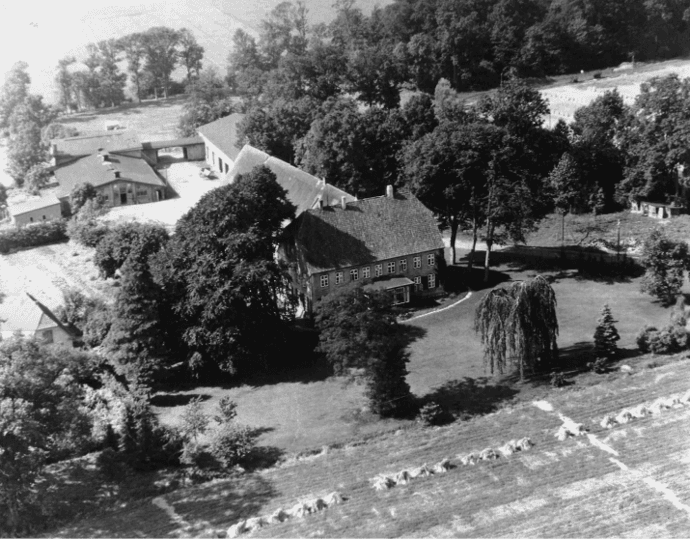
Hof Dannwisch, in northern Germany, where Otto grew up (picture from the 1950s)

Brokdorf, Feb 28, 1981: 100,000 peaceful protesters chased by police violence (credits: G. Zint)
1995–2004
From Organizational Learning to Deep Systems Change
Fast-forward to the mid-1990s. Otto's experiences on the farm and in the movements had left him with a question: if individuals and communities can sense an emerging future, why do our institutions so rarely act from it?
After completing his PhD at Witten/Herdecke University, Otto took this question to MIT and the organizational learning community around Peter Senge. Its tools helped organizations learn from the past, but many of the challenges leaders faced could not be solved that way.
Otto interviewed more than 150 leading thinkers and practitioners about how profound innovation comes into the world (some of these interviews he conducted together with Joseph Jaworski). One of them, with former Hanover Insurance CEO Bill O'Brien, captured the core insight: “The success of an intervention depends on the interior condition of the intervener.” We see what leaders do, but rarely the inner place from which they act.
“The success of an intervention depends on the interior condition of the intervener.”
Bill O'Brien, former CEO, Hanover Insurance
ACROSS 150+ INTERVIEWS, A PATTERN EMERGED
When attention stays narrow and reactive, systems repeat the past.
When attention opens and deepens, new futures become possible.
These insights first appeared in Presence (2004), co-authored with Peter Senge, Joseph Jaworski and Betty Sue Flowers, and were fully developed in Theory U (2007). Its central idea: the quality of results depends on the quality of awareness from which we act.
_______________________________________________________________________________________________________________________________________________________________
presencing
Otto's name for connecting to an emerging future, and acting from it.
_______________________________________________________________________________________________________________________________________________________________
2005–2014
The Founding Years
By the early 2000s, Otto's work had begun to take on a life of its own. More and more people, from business leaders to activists and educators, wanted to explore and apply it. A growing circle of collaborators was ready to carry it forward together.
In the winter of 2005, during a snowstorm in Cambridge, Massachusetts, Otto and a circle of co-founders founded the Presencing Institute. From the start, the circle envisioned a new place of learning: less a traditional institution than a multi-local university without borders.
THE FOUNDING CIRCLE
Over the next decade, the practice grew and spread. A turning point came in 2007, when Otto published Theory U: Leading from the Future as It Emerges. The book gave the work a shared language and framework, and it drew a growing community of practitioners around the world.
Over the years, tools and methods for applying the work built up: the group developed practices such as sensing journeys and case clinics, and the Presencing Institute decided to make every emerging tool open source (Creative Commons) so that it is accessible to everyone. Beth Jandernoa and Otto developed the Presencing Foundation Program, an intense four-day program in which participants learn these tools and apply them to their own context and work.
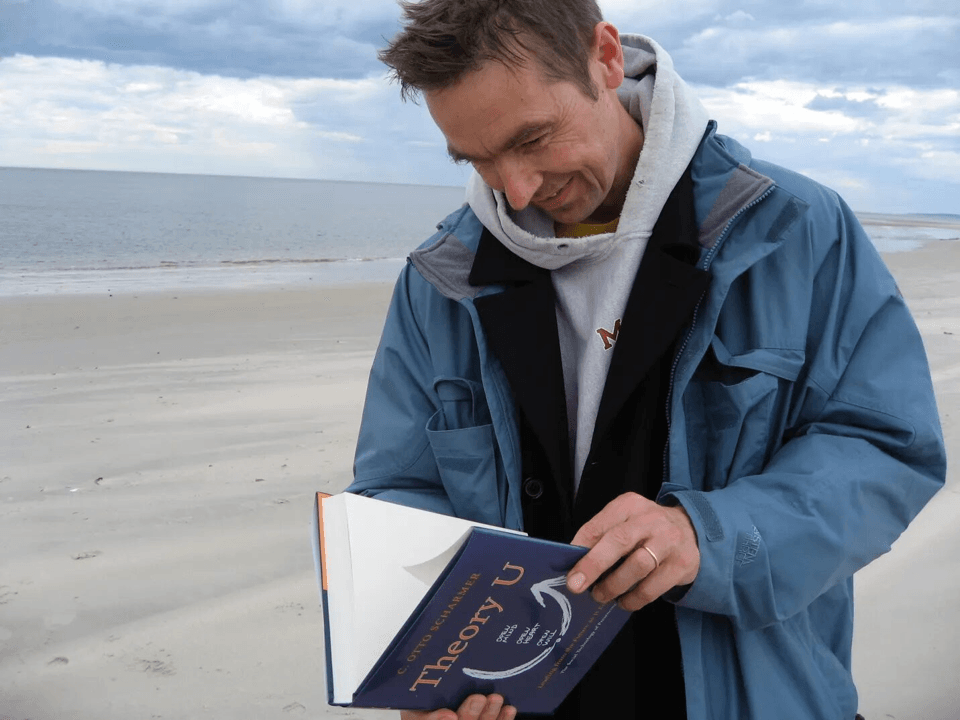
Otto surprised with the first copy of Theory U (2007)
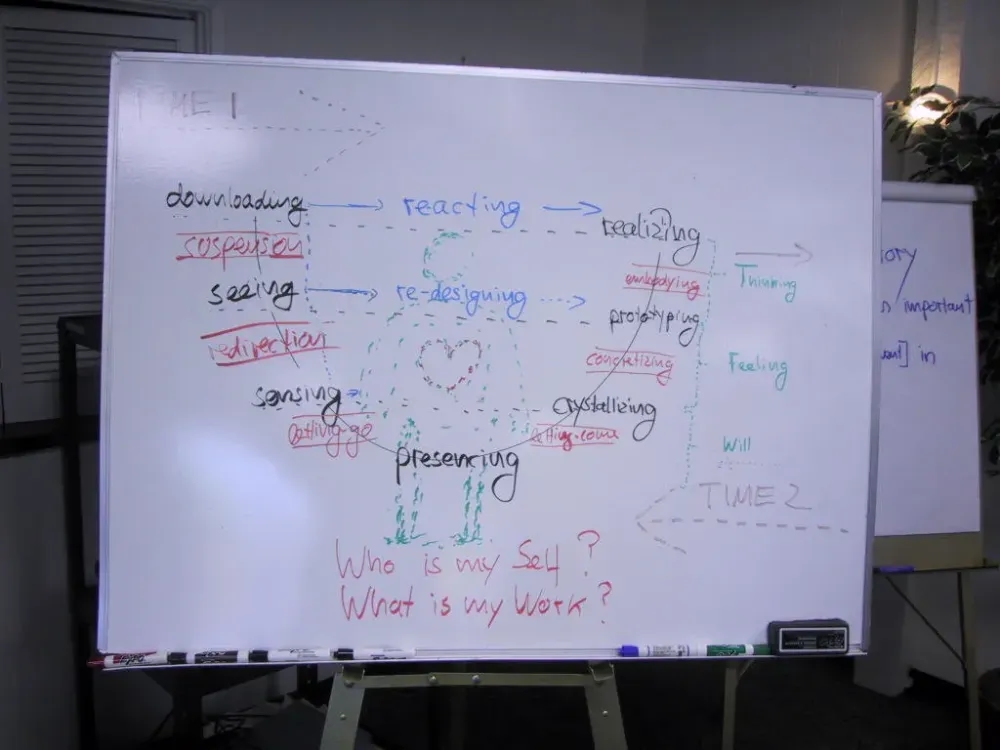
Early workshop version of the U
Social Arts: other ways of knowing
We found that groups could talk about their system for months without seeing their own part in it, or without sensing a potential future. Change required the ability to access other ways of knowing: through the body and through art. Two Social Art forms became central to our work.
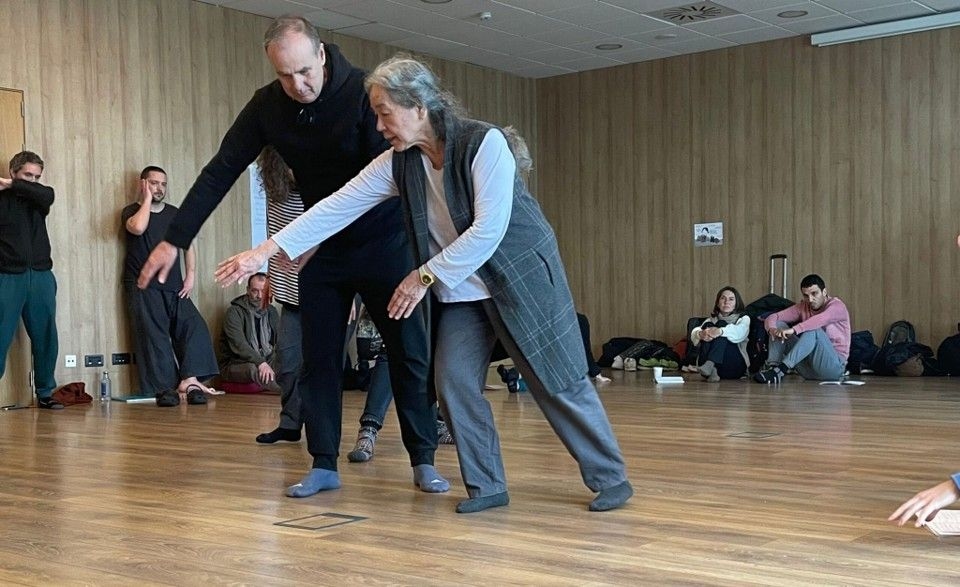
DEVELOPED BY ARAWANA HAYASHI AND COLLEAGUES
Social Presencing Theater
Drawing on dance, theater and contemplative practice, a group embodies its system through movement: where it is stuck, and what wants to emerge. In minutes, people can see patterns that months of discussion might never surface.
It is not “theater” in the conventional sense. Simple body postures, movements and spatial design dissolve limiting concepts, communicate directly, access intuition, and make visible both current realities and the deeper, often invisible, leverage points for shepherding profound change.
Book: Social Presencing Theater: The Art of Making a True Move (2022)
Photo: Arawana Hayashi guiding a Social Presencing Theater practice
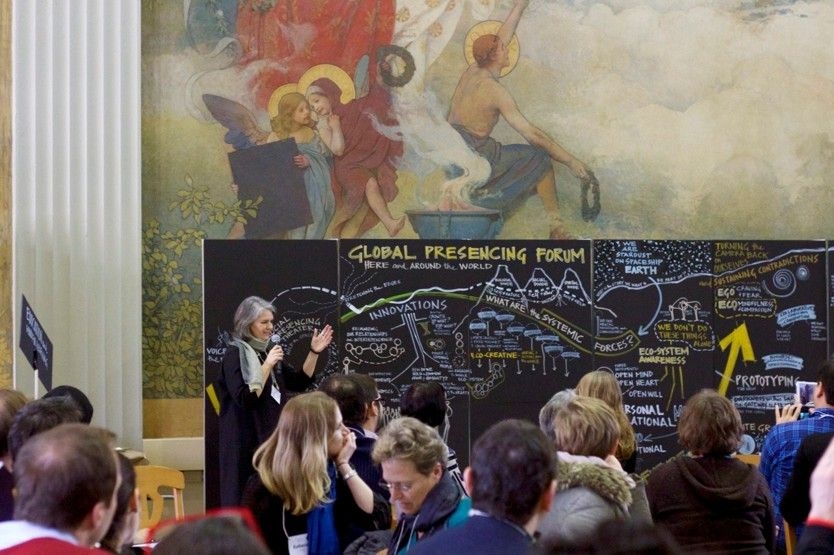
PIONEERED BY KELVY BIRD
Generative Scribing
The practice of drawing live while a group thinks together. It makes visible not only what is said, but what is trying to emerge, extending the practitioner's range to an entire ecosystem while drawing with an attunement to energy.
A generative scribe calls particular attention to an emerging reality brought to life by, and for, the social field. Because it is interactive and co-creative, it serves as a device for social seeing.
Book: Generative Scribing: A Social Art of the 21st Century (2018)
Photo: Kelvy Bird scribing at MIT during the 2014 Global Forum
Under the leadership of Arawana and Kelvy, the Social Arts became central to our work. Angela Baldini then enabled a set of programs that allowed individuals and teams to develop these social art skills.
2015-2024
Seeding & Cultivating a Global Ecosystem
If the founding years planted the seeds, this decade was about cultivating them at scale: in online learning, in global institutions, and in moments of crisis.
+260k
people from 191 countries have joined u-lab since 2015
1,800+
teams supported in prototyping change initiatives in their communities
26
countries where UN SDG Leadership Labs were delivered
15,000
people gathering online every month through GAIA during COVID-19
2015 · WITH MITx ON edX
u-lab: Learning at Scale
A free online course on leading from the emerging future. More than 260,000 people from 191 countries have since joined, and more than 80% describe their participation as eye-opening or life-changing.
Learning moved beyond one-to-many: participants practiced together in coaching circles, live sessions and self-organized local hubs. Follow-on programs have supported more than 1,800 teams in prototyping change initiatives in their communities.
ASIA PACIFIC
Advanced programs & IDEAS
At the same time, the Presencing Institute ran advanced programs and launched the IDEAS program in Asia, with leaders from government, the non-profit sector and business collaborating on social and green innovations.
2019 · 26 COUNTRIES
UN SDG Leadership Labs: Working Across Silos
As u-lab's methods spread, institutions began asking how to apply them to their own challenges, among them the United Nations. After two pilots in 2019, we launched the Labs under the guidance of the UN Development Coordination Office.
They helped UN Country Teams and Humanitarian Country Teams co-sense and co-create across institutional silos, so they could respond to crises better and faster.
SINCE 2013 · 70+ BANKS
Values-Based Banking: the GABV Leadership Academy
Under the leadership of Katrin Kaeufer, the Presencing Institute launched the GABV Leadership Academy, applying the U journey and tools to leading and innovating financial solutions in many regions. It is a collaboration with the Global Alliance for Banking on Values, over 70 social and green banks worldwide.
Katrin also launched a free online program on the topic at MIT, and summarized the work in Just Money: Mission-Driven Banks and the Future of Money (MIT Press, 2021).
2020 · GLOBAL, ONLINE
GAIA: Responding to a Global Crisis
When COVID-19 struck, the Presencing Institute launched GAIA (Global Activation of Intention and Action), bringing 15,000 people together online every month to sense the moment together and act on what emerged.
It showed that in a crisis, a diverse global community can connect, co-sense and act across many localities at once, and it seeded numerous local initiatives.
2018 · 17 AFRICAN COUNTRIES
Ubuntu.Lab Institute
Martin Kalungu-Banda noticed that only a handful of u-lab participants were joining from Africa, partly because of the cost of data. With Aggie Kalungu-Banda, he launched Ubuntu.Lab: a hybrid learning journey with local hubs in Nairobi, Accra, Lusaka and Cape Town.
By 2022, more than 200 facilitators and national coordinators had joined, and Ubuntu.Lab had become an independent institute.
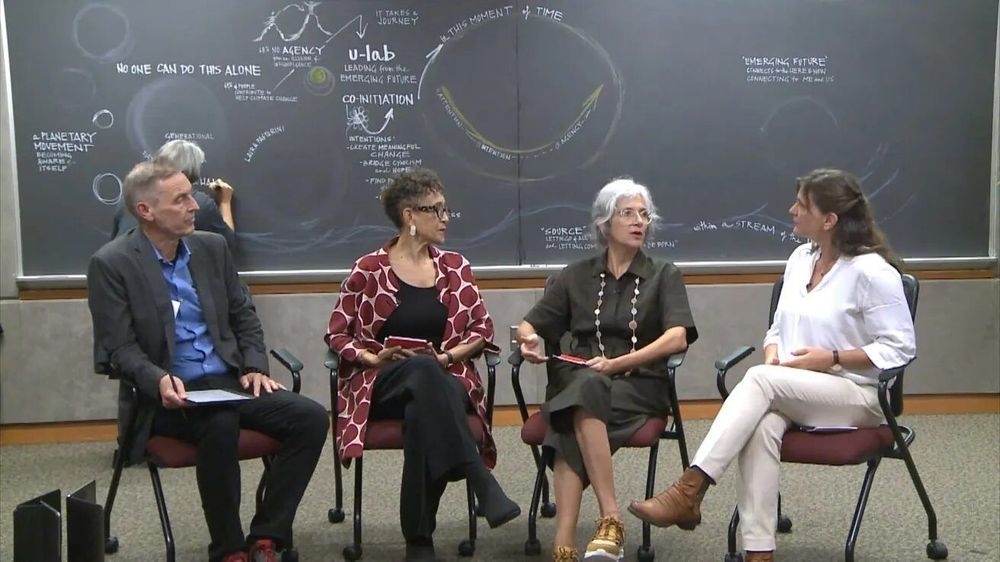
u-lab @ MITx: Otto, Dayna, Laura and Eva in dialogue (in the background, Kelvy)
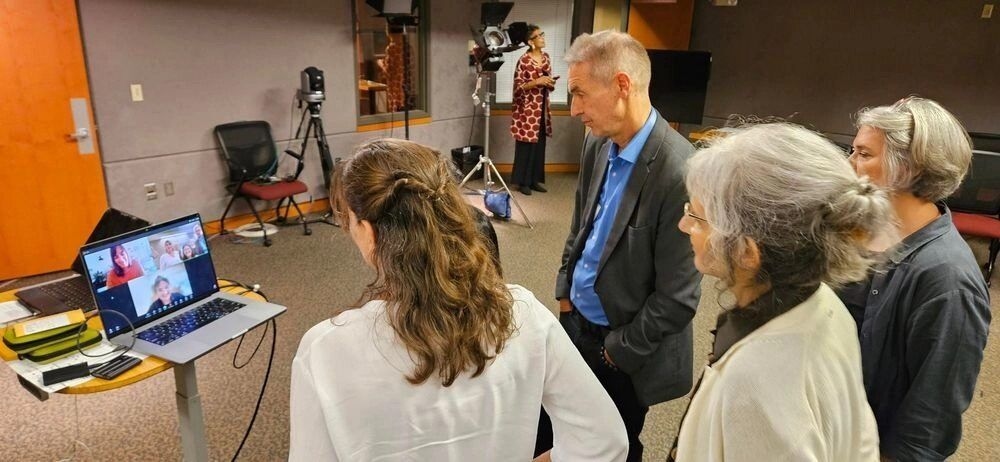
The on-site team debriefing with the virtual team after a live session at MIT
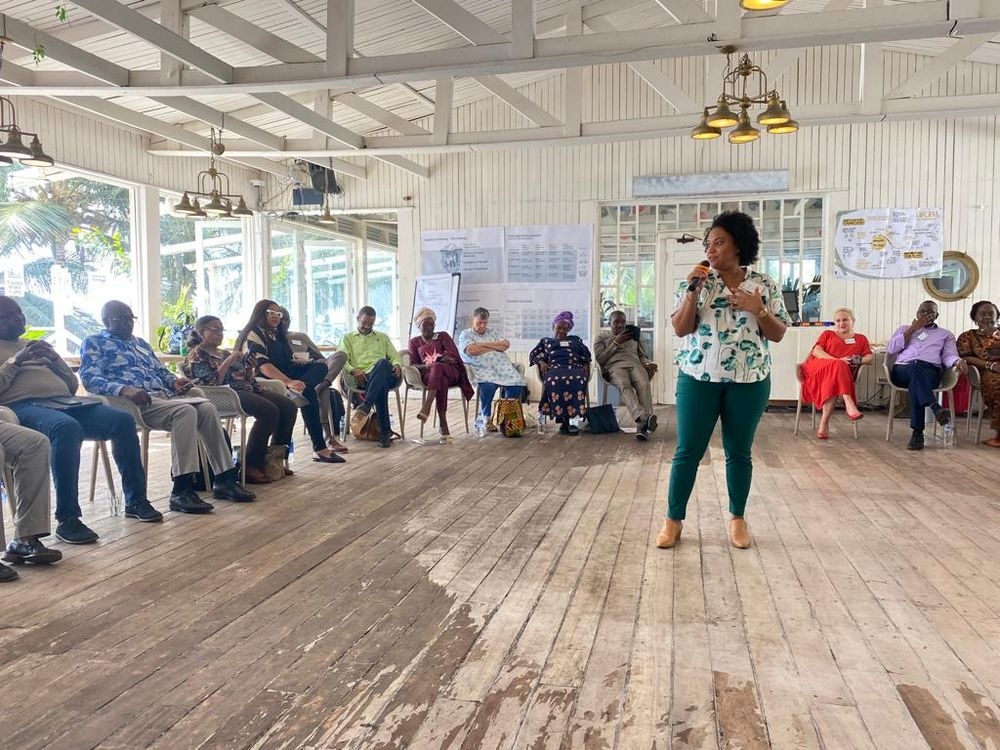
UN SDG Leadership Labs
ACTION RESEARCH
U-Research
The Presencing Institute was founded as an action research institute, with Theory U, which emerged from the dialogue interviews described above, as its foundational framework. In 2021 we launched the Journal of Awareness-Based Systems Change (JASC), now indexed in DOAJ and Scopus, with over 380,000 views and downloads. JASC serves the emerging field of awareness-based systems change as a platform for cutting-edge research and thought leadership not found in other domains.
We have continued to evolve the founding framework of Theory U through six additional books, foundational research papers, and dozens of articles and blogs. Most recently, we launched our vision for a Science of the Social Field, activating a worldwide ecosystem of researchers who co-pioneer the methods, research, and applications that bring it to life.
FIVE LANGUAGES · MANY REGIONS
Working with Organizations and Initiatives
From the beginning, the Presencing Institute has focused on concrete applications: change initiatives in different sectors and regions. To do so, we build a network of advanced practitioners who can deliver this work in five different languages around different regions in the world.
They work with businesses, institutions or initiatives to lead and learn from the future. PI’s practitioners work in close partnerships with these different organizations and initiatives and support leadership development, innovation processes, strategy development – to name a few.
2005 ONWARDS
Local Ecosystems, AI & a New Science of Social Fields
Over the past few years, practitioners in different regions began connecting, learning and collaborating regionally. One innovation they launched is the Ecosystem Leadership Programs (ELPs), a support structure that blends learning with movement building for regeneration and flourishing.
ELPs became spaces where local initiatives and communities collaborate, deepened by walking and weaving with Indigenous leaders and knowledge holders as co-faculty and as fellow participants in these journeys.
These programs cultivate intentional and relational coherence and long-term transformation across whole landscapes and regions. Together, they mark a shift from global learning platforms toward deeply rooted, locally embodied ecosystems of practice.
ELP ASIA PACIFIC
Grounded in Tri Hita Karana
The Ecosystem Leadership Program is grounded in the Tri Hita Karana wisdom of Bali.
ELP LATIN AMERICA
A Wisdom Council for all beings
Dialogue follows a traditional Wisdom Council practice that includes more-than-human beings: participants speak on behalf of rivers, forests, animals and future generations, so the wider web of life can shape regional action.
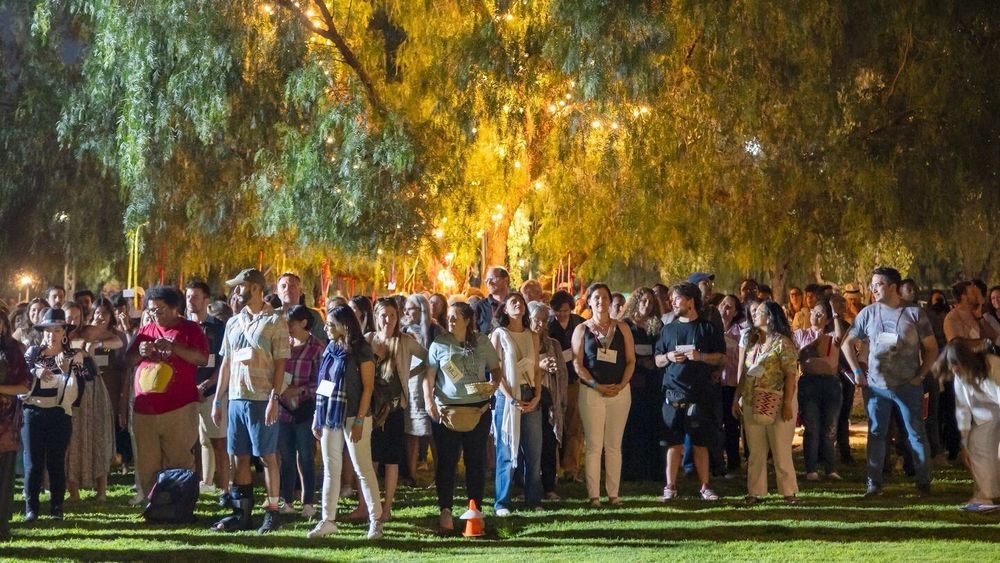
Co-shaping the Tree of Intentions (ELP LatAm 2025, Querétaro, Mexico)
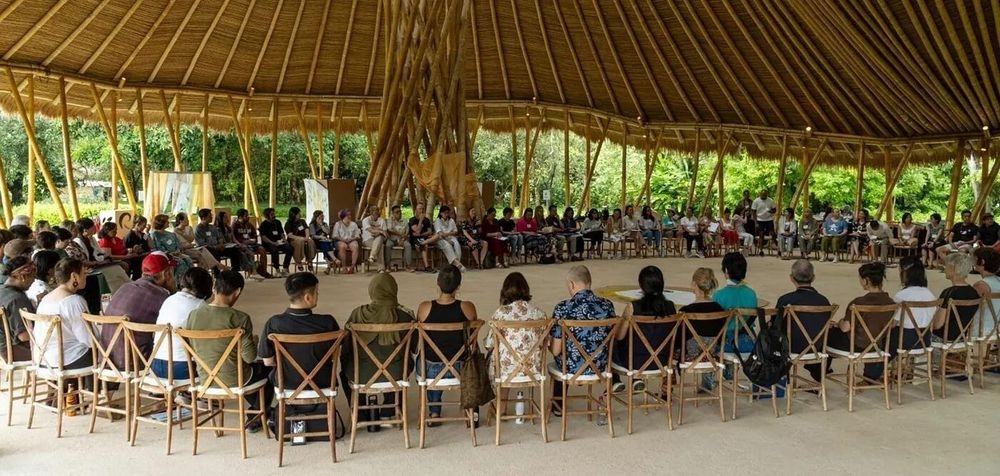
Dialogue Circle (ELP Asia Pacific 2026, Kura Kura, Bali, Indonesia)
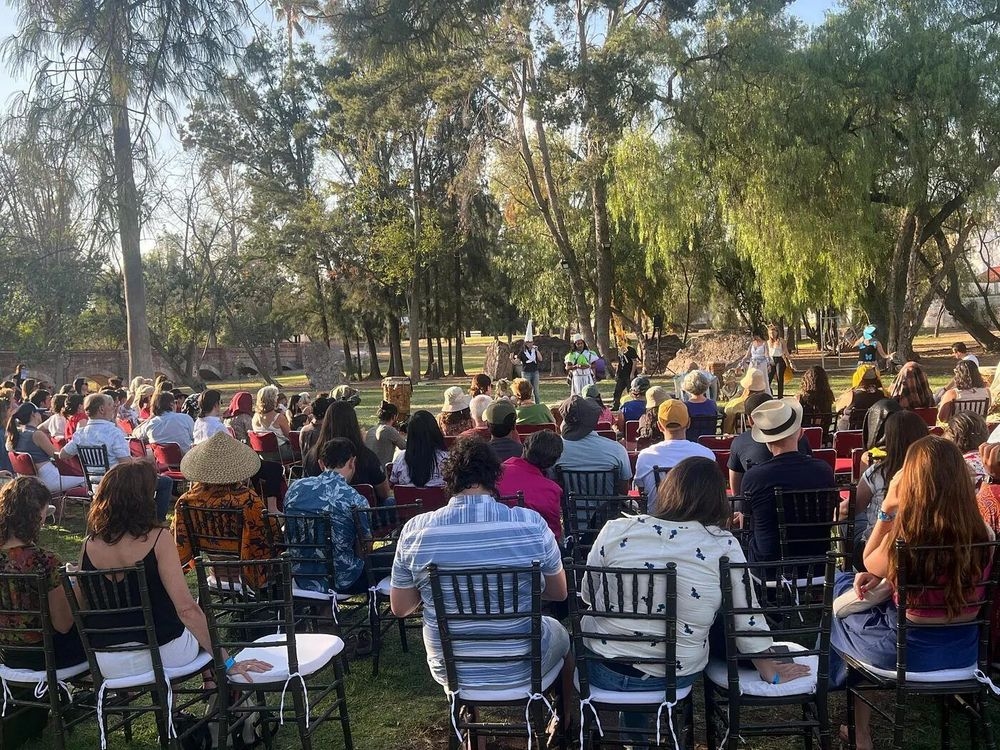
The Parliament of All Beings (ELP LatAm 2025, Querétaro, Mexico)
These programs cultivate intentional and relational coherence and long-term transformation across whole landscapes and regions. Together, these initiatives mark a shift from global learning platforms toward deeply rooted, locally embodied ecosystems of practice.
THE DEEPER CONTEXT
Are we entering a second Axial Age?
The first, some 2,500 years ago, gave birth to the great wisdom traditions by turning attention inward, toward the source of knowing. Today, as intelligence is being externalized into machines at planetary scale, the same turn is called for again. This time it is not for individuals alone, but for communities and societies learning to sense and act from the whole.
Three forms of intelligence are at stake.
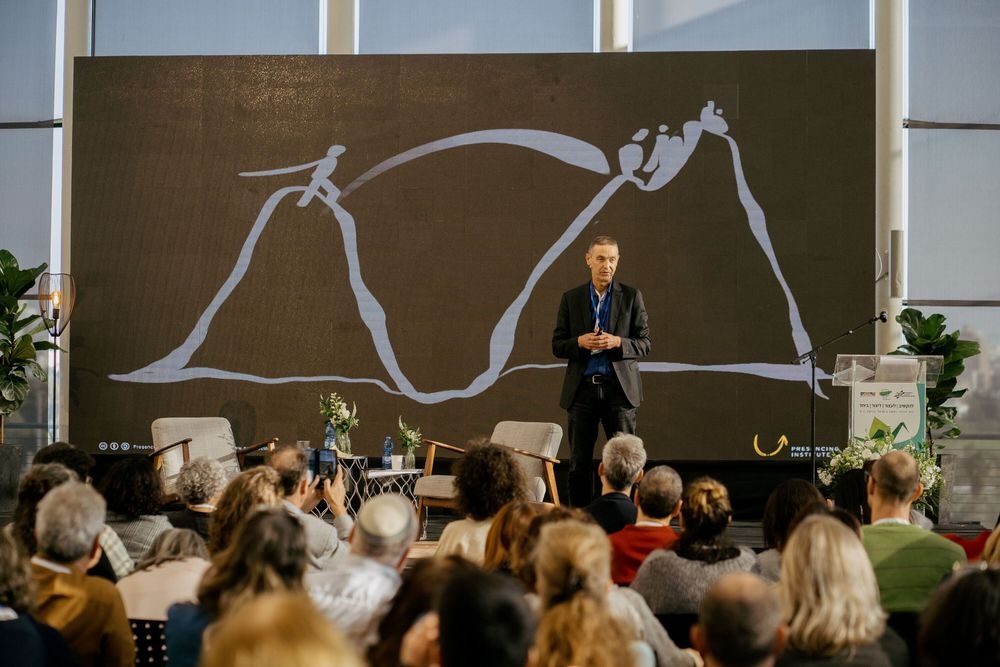
Otto Scharmer in dialogue: What kind of action science and societal shift is our time calling for?
AI
The artificial intelligence of machines
OI
The organic intelligence of living beings
SI
The source and social soil intelligence that becomes available when a group's attention opens
Almost all investment flows into the first. But a civilization that cultivates only one of its intelligences is building a monoculture, and monocultures collapse.
OUR NEXT CHAPTER
Three questions we are living into
1
Social soil
How can we hold spaces where people see, sense and think together, and regenerate the social soil of our communities?
2
A science of social fields
How can we make the quality of our relationships and awareness visible and researchable, so that societies invest in all three intelligences?
3
Regeneration
How can we support the planetary movement reshaping food, education, health, finance, AI and governance, from ego-system to eco-system?